FoxDesk case study
From client request to clear report.
At AENZE, work for one client can involve an employee, a freelancer and a connected agent such as Codex or Claude Code. FoxDesk keeps their work in one history, so the client gets a clear answer at the end of the month.
The request arrives
01People and agents record the work
02The client receives the report
03The problem
The work was done. Its history was scattered.
A request started in email. An employee answered it. A freelancer delivered another part. Codex or Claude Code helped with the technical work. The result was real, but its record was spread across messages, timers and separate tools.
At the end of the month, we still had to answer three ordinary questions for the client: What did we do? How long did it take? What are you paying for?
We built FoxDesk so the answers are collected while the work happens, not reconstructed before the invoice leaves.
How FoxDesk works
One request becomes a complete work record.
The ticket stays as the shared context from the first email to the report the client opens.
- 01A request arrives
Email or a portal message becomes a ticket for the correct client.
- 02Someone takes responsibility
The owner, priority, deadline and next step remain visible.
- 03The work is recorded
People use a timer or manual entry. Connected agents can add an approved result and time.
- 04The client gets a report
Completed work, exact durations and cost are reviewed before sharing.
One source of context
Open the ticket and understand the work.
The request, conversation, owner and time entries stay together. Anyone taking over can see what the client asked for, what changed and what still needs attention.
No search through inboxes before answering the client.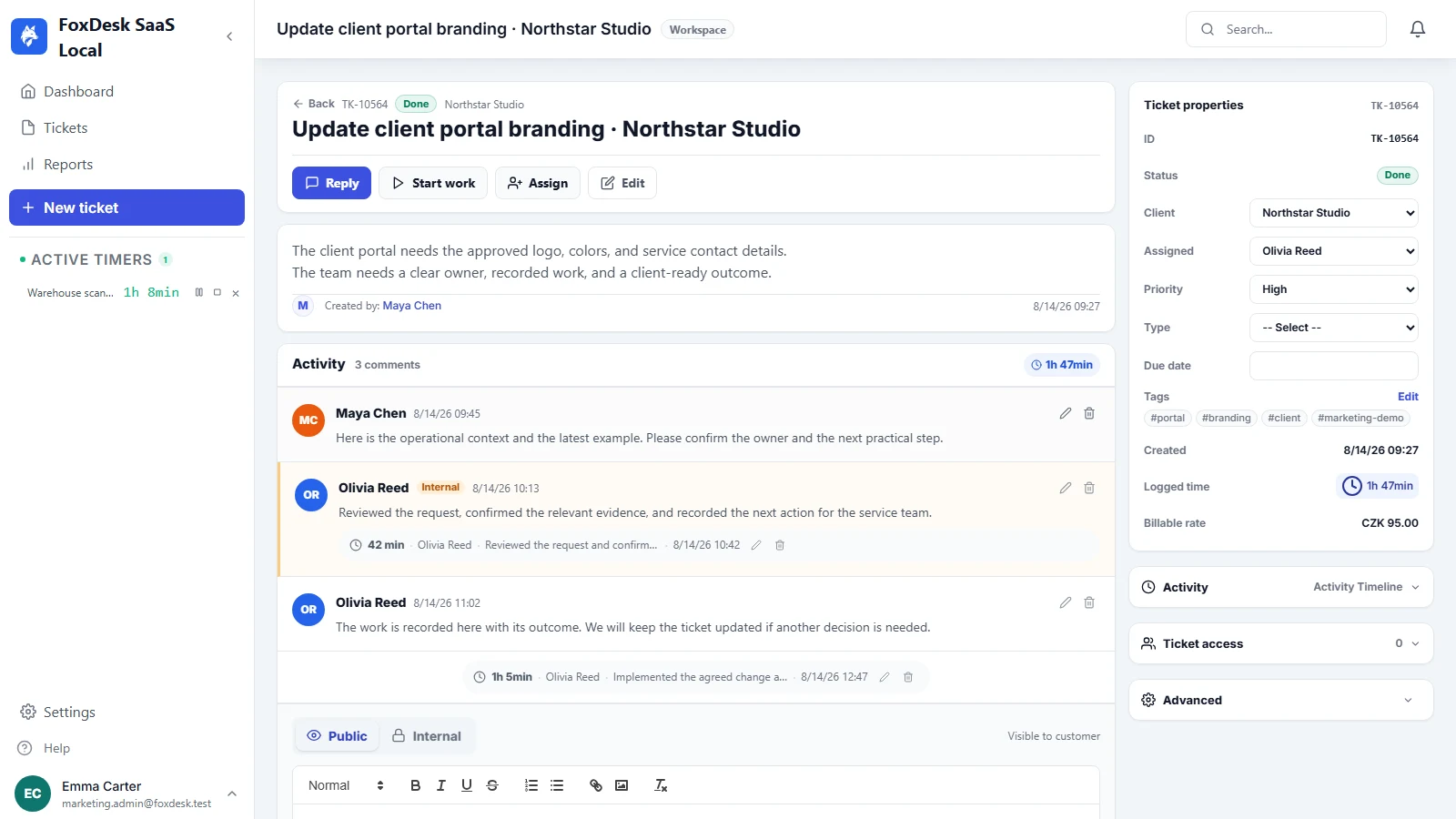
One team history
Employees, freelancers and agents work for the same client.
A phone call handled by an employee, a design change delivered by a freelancer and a technical fix completed with Codex can all belong to the same client and month.
The team sees one workload instead of separate fragments.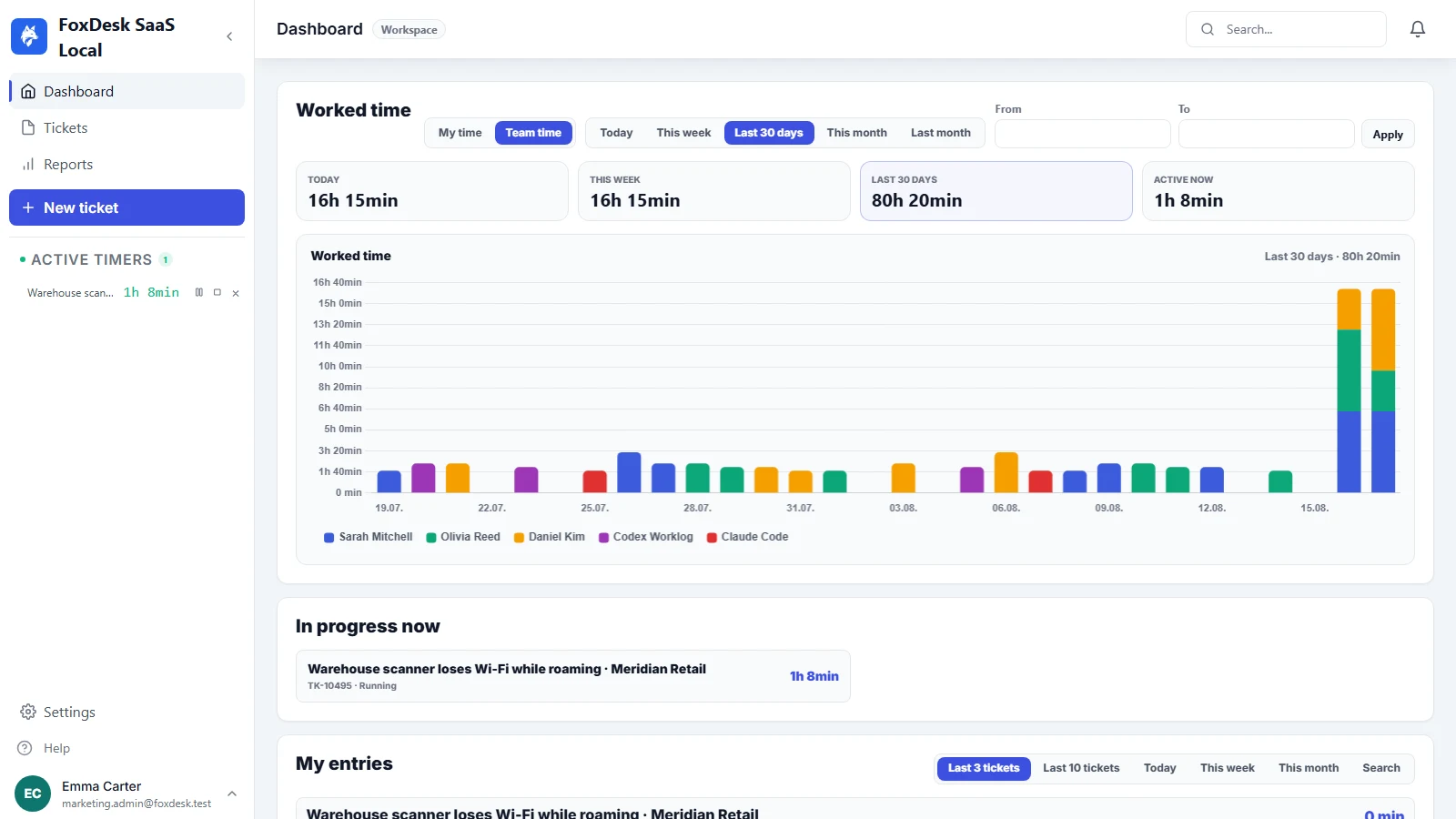
A report with context
The client sees the work behind the invoice.
Each work entry stays attached to its ticket and client. We review completed work, exact time and cost before sending anything.
The report explains the result instead of presenting a bare total.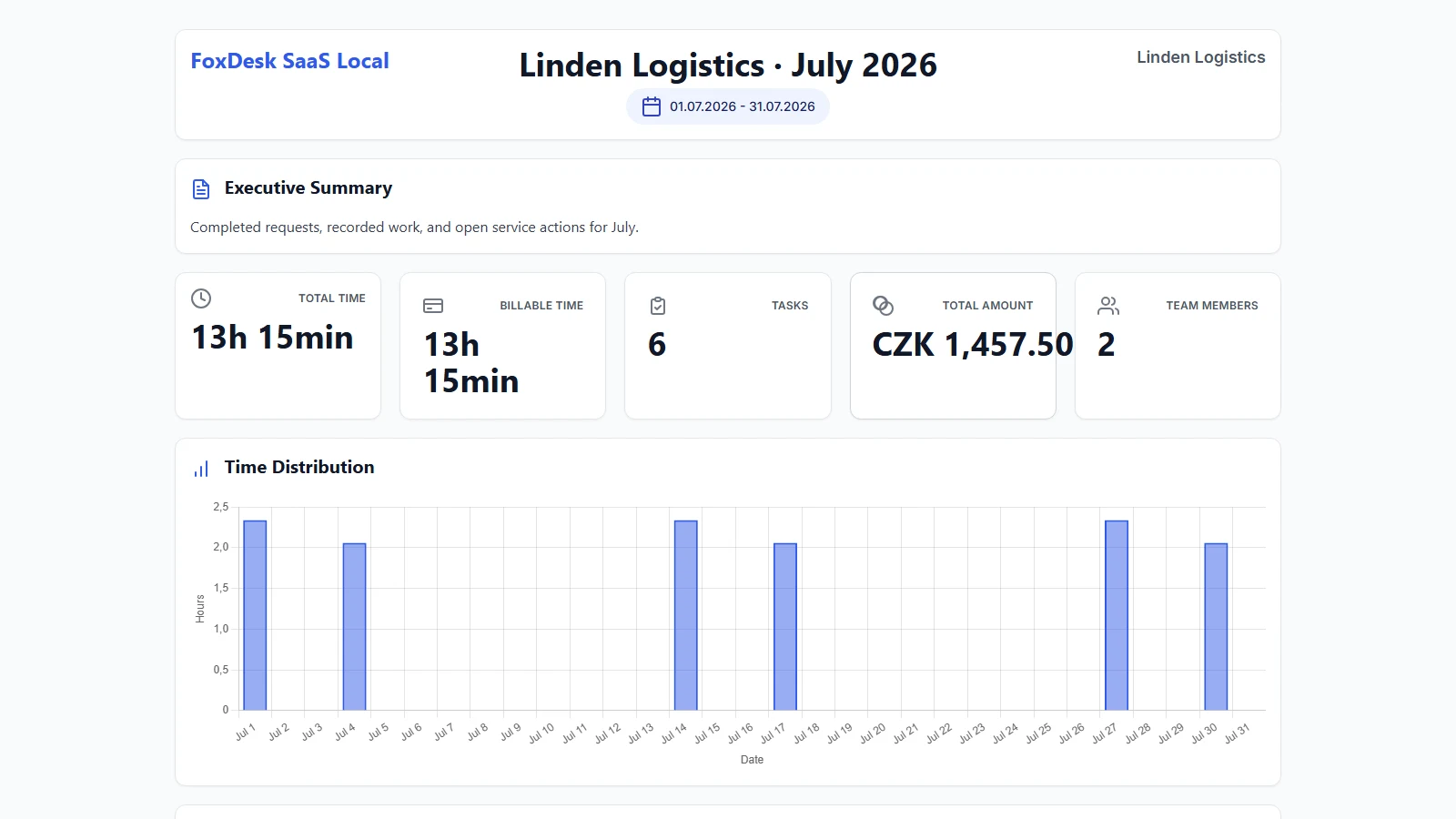
Choose how to run it
FoxDesk Cloud or your own server.
The product workflow is the same. The operational responsibility is not.
FoxDesk Cloud
For people who want to start without installing PHP, configuring email or taking care of updates and backups.
Try it for 14 days without a cardFoxDesk Open Source
For teams that want the public application on infrastructure they control and are ready to operate it themselves.
View the public repository